http://assets.natgeotv.com/Shows/24415.jpg
  • SECONDS FROM DISASTER

  • Every Thursday 20:40 KSA 21:40 UAE

DESCRIPTION

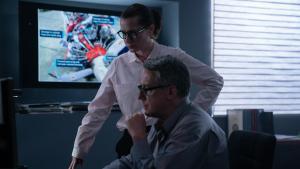
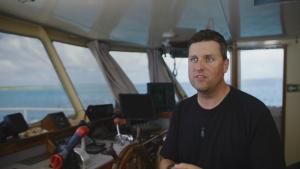
Blending advanced CGI, re-enactments, archival footage, forensic science, dramatic eyewitness accounts and expert testimony, we recreate in gripping detail the final moments behind some of the most calamitous disasters of modern time.

Comet Air Crash

In early 1954, one of the world’s first passenger jet airliners, the British-made de Havilland Comet, crashes into the Mediterranean 20 minutes after leaving Rome for London. Post-mortem examinations show that many of the 35 people who died suffered highly unusual injuries. Investigators hoped to find answers by piecing together the plane. Three months later a second Comet crashes and victims exhibit the same bizarre injury patterns. What brought down the Comets, and what could have caused such strange injuries?

Montserrat

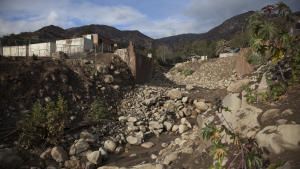
With its crisp sandy beaches, fertile greenery and picturesque scenery, Montserrat is a true Caribbean paradise. The tiny island suffers a fright in 1995 when its Soufriere Hills Volcano erupts for the first time in over 300 years. Experts establish an exclusion zone around the volcano but on June 25, 1997 it erupts again, expelling tonnes of lava, killing 19 people and devastating several villages. We re-enact the final moments before tragedy struck.

Chicago Flight 191

On 25 May, 1979, a McDonell Douglas - DC10 aircraft, packed with holiday and business travellers takes off from Chicago’s O’Hare Airport in the U.S. Only 31 seconds after take-off, the plane loses power from one of its engines and crashes into a nearby trailer park, taking the lives of 273 people. Hundreds of witnesses claim to have seen an engine separate from the wing upon take-off, but the three-engine DC10 should have been able to fly using just one engine. What caused the pilots of the DC 10 to lose control of their plane so quickly? Join us as we unlock the mystery behind one of America’s most catastrophic air accidents.

EPISODE GUIDE

  • Seconds from Disaster: Pearl Harbor
    Peacetime regulations meant that the American fleet in Hawaii were unprepared for the surprise Japanese attack on December 7th, 1941.
  • Seconds from Disaster: Fukushima
    An international nuclear expert will investigate what happened at Fukushima and see what, if anything, could have been done to prevent it.
  • Seconds from Disaster: Cable Car Collision
    Analysing the circumstances surrounding a tragic accident in 1998, which saw 19 tourists and a cable car operator fall 300 feet to their deaths.
  • Seconds from Disaster: The Deepwater Horizon
    We investigates the series of decisions and failings that culminated in the catastrophe and the world's biggest accidental marine oil spill.
  • Seconds from Disaster: Paddington Rail Disaster
    When two London trains collide at high speed, the impact and resulting fireball kill 31 people and leave hundreds injured. Investigators lift the lid on one of Britain’s worst rail accidents.
  • Seconds from Disaster: Mumbai Massacre
    Seconds from Disaster reveals the failings that allowed 10 terrorists free reign - killing at will - for nearly 3 horrifying days in Mumbai's luxury Trident Oberoi hotel.
  • Seconds from Disaster: Death In Mid-Air
  • Seconds from Disaster: Bhopal
  • Seconds from Disaster: Nine Eleven
  • Seconds from Disaster: Crash Of The Concorde
    Concorde was the world's first supersonic airliner. For 25 years it crisscrossed the Atlantic, its graceful delta shape a symbol of luxury and high technology. On July 25th, 2000 a hundred people, mostly from Germany, board Concorde on a charter flight to New York for the holiday of a lifetime. But Concorde catches fire on take off and crashes into a nearby hotel 6 miles from the threshold of the runway, killing all on board and 4 people in the hotel. Investigators analyzed the accident second by second. They discovered that when a Continental airlines plane took off a piece of metal fell off on to the runway. Five minutes later when Concorde took off, it ran over the metal strip. The tyre burst and then a large piece of it flew up and punched into the wing. The fuel tank burst. Fuel leaked over the engines and caught fire. The pilots fought to control the plane and land, but as the wing melted in the intense heat, Concorde stalled and crashed.
  • Seconds from Disaster: Tunnel Inferno
    Beneath Europe's highest mountains, the seven-mile long Mont Blanc road tunnel connects France and Italy through the Alps. Disaster strikes when a freight truck catches fire, creating a deadly inferno. A 53-hour fire-fight and a death toll of 39 people reveals why tunnels all over the world could be second from disaster. The Monte Blanc Tunnel Fire details the events that led to one of the world's worst road traffic tunnel accidents on March 24th, 1999.
  • Seconds from Disaster: The Bomb In Oklahoma City
    On a bright spring morning in Oklahoma City employees arrive at work in the Alfred P Murrah Federal building. Dolores Watson drops her grandson at the second floor day care centre. Florence Rogers begins a meeting. Daina Bradley watches as at 9.01 Timothy McVeigh parks a Ryder truck outside the back, street entrance of the building. One minute later the truck explodes. The blast creates a crater 8 feet deep and destroys the front columns of the building and its glass facade. Then with the nine storey structure weakened, the building collapses floor by floor. The programme reconstructs the terrorist attack and the arrest of Timothy McVeigh. Survivors Daina Bradley, Dolores Watson and Florence Rogers tell their harrowing stories and investigators examine how the building collapsed and why some people lived and some survived.
  • Seconds from Disaster: Fire On The Star
    It's Easter, 1990. People board the ferry, 'Scandinavian Star', for the night crossing from Norway to Denmark. Many are off to visit family for the holiday weekend. Some will reach their destinations; but others will be dead in less than 6 hours. In the early hours of the morning a fire breaks out in a corridor on Deck 3. Many passengers are sleep in their cabins on the decks above; they are completely unaware of the blaze. Within minutes fatal fumes are produced, they filter rapidly to the decks above. People are overcome in their sleep. The investigators piece together the events of the night second by second. They discover why the fire spread so swiftly and why it was so toxic. Was the fire an accident or was it a case of arson? Date: 6th-7th April 1990. Fatalities: 158
  • Seconds from Disaster: Derailment At Eschede
    The German Inter City Express (ICE) was considered the ultimate in safe and luxurious high-speed train travel. But on June 3rd, 1998, a train derails as it travels at 125mph towards the sleepy town of Eschede, and slams against a 300-ton concrete bridge which falls onto the train. Carriages accordion and in 180 seconds 101 passengers are killed in the world's worst high-speed rail disaster to date. Why?
  • Seconds from Disaster: Wreck of the Sunset Limited
    The captain of a towboat pushing six barges up the Mobile river in Alabama, U.S. becomes disoriented by a dense fog. Unwittingly, he enters a nearby bayou and doesn't realize that one of his barges has collided with a rail bridge. Meanwhile, a few kilometers away, the Amtrak Sunset Limited is heading straight towards the damaged bridge at 116 km/h. Wreck of the Sunset Limited examines Amtrak's worst accident, which killed 47 people on September 22, 1993
  • Seconds from Disaster: Meltdown In Chernobyl
    Behind every disaster lies a catalogue of events, a series of trigger points that combine to create a catastrophe. Seconds From Disaster examines those pivotal moments, some of which changed the course of history itself.
  • Seconds from Disaster: Inferno In Guadalajara
    A subterranean infrastructure of sewers, gas, and water pipes keeps every modern city alive. We take them for granted until something goes wrong. On April 22nd 1992 in the Mexican city of Guadalajara things went very wrong. Five underground explosions ripped through the Reforma neighborhood. Eight km (5 miles) of streets were destroyed. Over 200 people were killed. Now using cutting edge computer technology 'Seconds From Disaster' reveals exactly what went wrong in Guadalajara. Disasters don't just happen. They're a chain of critical events. We unravel the fateful decisions - that lead to the catastrophe. Block after block is destroyed, hundreds of homes and businesses are damaged, and over 15,000 people are left homeless. The official death toll is 206, and over 1400 people suffer injuries.
  • Seconds from Disaster: Fire On The Ski Slope
    A Funicular railway winds its way up the Kitzsteinghorn Mountain in Austria. It's a beautiful day and 162 passengers are making the short trip to the world famous ski slopes. As the train enters a tunnel, passengers realise there is a fire on board. Within minutes an inferno takes hold and 155 people lose their lives in what is to become Austria's worst peacetime disaster. How did the fire begin? Funicular trains have no engines or fuel tanks. Could one of the passengers have started the blaze? Why was the death toll so high when everyone managed to get out of the carriages?
  • Seconds from Disaster: Explosion In The North Sea
    6 July 1998. 120 miles off the coast of Scotland, towering nearly 300ft out of the North Sea, stands the colossal Piper Alpha oil rig. It's at the hub of the North Sea's most lucrative oil field, churning out some 120,000 barrels of oil per day. But when a lapse in communication during maintenance leads to a gas leak, catastrophe ensues. A ferocious fire triggers a series of gas pipeline ruptures and explosions, killing 167 men and destroying Piper Alpha. It is the world's worst ever offshore disaster.
  • Seconds from Disaster: Flood at Stava Dam
    In a beautiful valley in the Italian mountains a threat looms. High above the villages a reservoir of wastewater is slowly filling to bursting point. On 19th July 1985 at 22 minutes past mid-day the dam breaks. A colossal landslide surges down the valley at 56mph heading for the village of Tesero. The muddy mass kills 268 people and destroys everything in its path. Over 2 and a half miles are covered with a thick layer of mud. Had there been an earthquake? Or could one of the world's worst industrial catastrophes have occurred.
  • Seconds from Disaster: Collision on the Runway
    In 1977,a Pan Am Boeing 747 bound for the Canary Islands & a KLM jumbo jet to Amsterdam collided on a runway in Tenerife & 583 people were killed.Why?
  • Seconds from Disaster: Columbia Space Shuttle
    The shuttle Columbia broke apart as it re-entered the Earth's atmosphere after a successful 16-day mission in space, killing all seven crew. NASA had not suffered such a loss since the Challenger in 1986. What caused the accident?
  • Seconds from Disaster: Freeway Plane Crash
  • Seconds from Disaster: Zeebrugge Ferry Disaster
    More than 190 people died when a British car ferry capsized off Zeebrugge, Belgium, on 6 March 1987. Why were the bow doors left open?
  • Seconds from Disaster: Kobe Earthquake
    In January 1995, the residents of Kobe, Japan, woke up to a violent earthquake rocking the city. Within 20 seconds almost 400,000 buildings were destroyed, leaving 250,000 people homeless and more than 5,500 people dead.
  • Seconds from Disaster: Singapore New World Hotel Collapse
    Hotel New World,a popular budget hotel in Singapore collapses like a pack of cards, killing 33 people. Why did the building suddenly collapse?
  • Seconds from Disaster: Alpine Tsunami
    The village of Galtur, nestled in an Alpine valley and surrounded by towering peaks, is a charming picture-perfect ski resort in Austria, which draws up to 4,000 tourists during the peak ski season. Although Galtur had been declared safe from the threat of avalanches, this idyllic winter paradise was changed within minutes on February 23, 1999. Suddenly that winter afternoon, 187,000 tons of snow break loose from the slope of Grieskopf Mountain, reaching speeds of up to 418 km/h, and crashing into the village's 'safe zone'. The avalanche kills 31 people, and injures many others. An investigation later reveals the underlying weaknesses in the snow pack which caused the disaster and ultimately changed how experts predict avalanches.
  • Seconds from Disaster: Mount St. Helen’s Eruption
    It is a beautiful spring morning in picturesque Washington State, U.S. on May 18, 1980. In the shadow of Mount Saint Helens, one of the most active of the continent's volcanoes, people are waking up, having breakfast and starting to go about their daily business. Suddenly and brutally, this idyllic scene is shattered when the mountain violently erupts. In a matter of minutes, ash fall has turned day to night, 600 square kilometres have been laid waste and 57 people have lost their lives in one of the biggest recorded explosions of all time.
  • Seconds from Disaster: Sioux City
    On 19 July 1989, the engine of a DC-10 failed, sending the plane crashing down onto a runway at Sioux City airport. What went wrong?
  • Seconds from Disaster: Gare de Lyon
    Gare de Lyon, Paris, 27 June 1988, a frantic train driver calls the stationmaster at Gare de Lyon, with terrible news. His train is out of control, heading downhill towards one of Paris' biggest stations. After desperate attempts to slow the train and hysterical calls to the Paris station, he leaves his cab and moves passengers to the rear of the runaway train. Seconds after his last call, the train careers into the station and ploughs into the back of a packed stationary commuter train which sits still on the platform. Fifty-six people die in what, at the time, was the worst disaster in French railway history. There is an enormous public outcry and three separate inquiries into the accident are set up. Why exactly did the brakes fail? And why, when the station knew that the train was in trouble, didn't they divert it away from a crowded platform?
  • Seconds from Disaster: Hindenburg Air Ship
    The largest airship ever built and the pride of the Nazi government, the Hindenburg met its fatal demise in May 1937. Approaching Lakehurst naval station in New Jersey, fire broke out. In under a minute the airship was destroyed.
  • Seconds from Disaster: Puerto Rico Gas Explosion
    In November 1996 a commercial building in San Juan, Puerto Rico, exploded due to a natural gas leak, killing 33 people. Investigations revealed that an inactive gas line leaked though a corrosion hole caused by excavation damage.
  • Seconds from Disaster: TWA 800 Plane Crash
    Less than 30 minutes after take-off, a Boeing 747 exploded and plummeted into the water off Long Island, New York, killing everyone on board. What went wrong?
  • Seconds from Disaster: Singapore Hotel Collapse
  • Seconds from Disaster: Hindenberg Airship
  • Seconds from Disaster: The Bismarck
    The Royal Navy's battle with Bismarck is a pivotal point in WWII. Naval historian studies this battle and finds out the reasons for Bismarck's fate.
  • Seconds from Disaster: Mountain Tsunami
    In 1960 construction of Europe's tallest dam is completed in Italy. But in 1963, it created a tsunami 200 meters high killing more than 2000 people.
  • Seconds from Disaster: 9\11
    Revisit September 11 with a collection of powerful, immersive stories of people who were intricately associated with & impacted by the event. Many of these incredible stories are yet to be heard.
  • Seconds from Disaster: Waco Cult
    We counts down to the moment fire breaks out and investigates if the deaths were led by charismatic cult leader or killed by murderous Federal agents.
ADVERTISEMENT

PHOTOS

VIDEOS